The entertainment industry is notoriously unforgiving, a machine that often demands its participants conform to specific archetypes. For those who do not fit the traditional mold, the pressure to compromise is immense. Yet, few stories illustrate the power of integrity as sharply as the career of Peter Dinklage. Before he was the sharp-witted Tyrion Lannister or a cosmic giant in the Marvel Universe, he was a struggling actor in New York City, shivering in an unheated loft, making a choice that would define his entire life: he would rather be hungry than be a punchline.

The Foundation of Independence
Dinklage’s journey began in Morristown, New Jersey, where he was raised with a pragmatic independence. Born with achondroplasia, he did not grow up in a home modified to cater to his stature. Instead, he learned early on to solve problems for himself. This childhood environment fostered an intellectual and emotional toughness that would become his greatest asset. He developed a dry, sharp wit as a defense mechanism, a tool he would later use to navigate a world that was often narrow-minded regarding his physical appearance.
While many might have sought comfort in conforming, Dinklage leaned into the arts. In the basement of his family home, staging puppet shows with his brother, he found a medium where he could control the narrative. By the time he reached Bennington College, he had discovered that the stage was a place where presence, intelligence, and emotional depth were the only currencies that mattered.
The Price of Principles
Arriving in New York City in 1991, Dinklage was hit with the harsh reality of the acting world. He faced a constant barrage of offers to play “magical” creatures, leprechauns, or elves in commercials and holiday films—roles that would have offered immediate financial relief. Most would have taken the money, but Dinklage viewed these roles as a betrayal of his worth. He spent six years working a mind-numbing data processing job, enduring financial instability and the freezing cold of an industrial workspace, rather than trade his dignity for a gimmick.
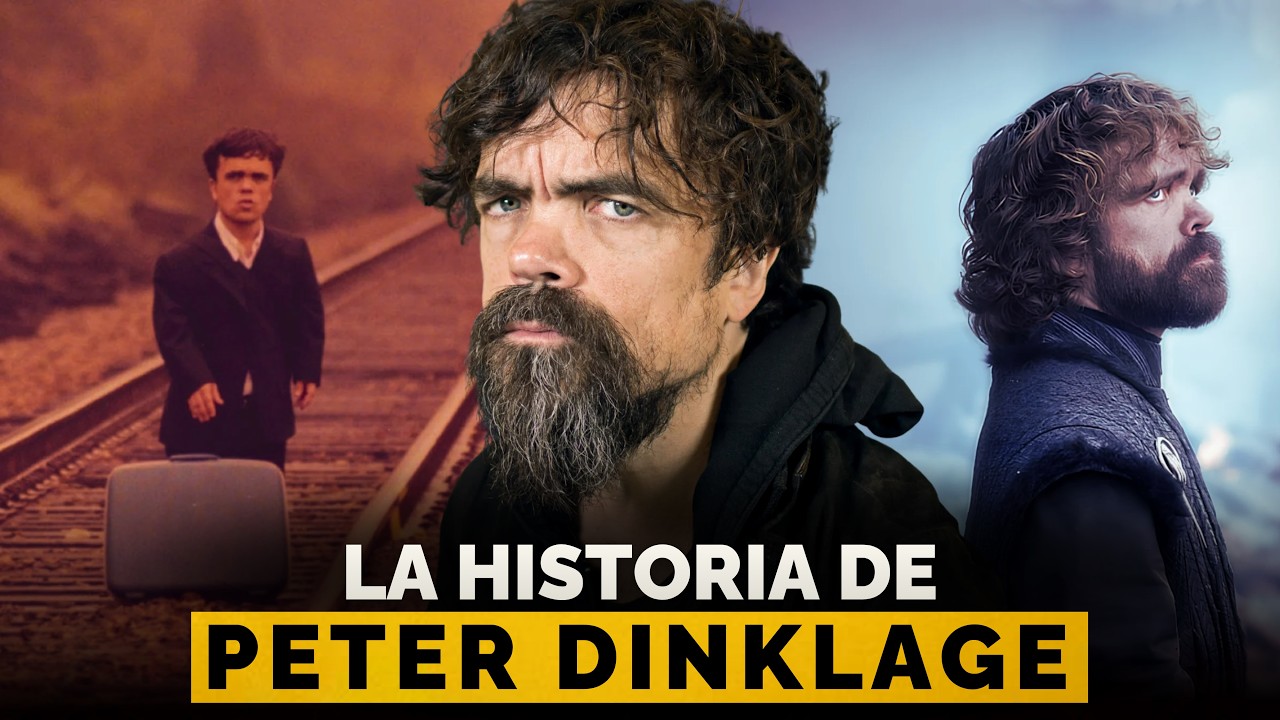
His breakthrough in the 1995 independent film Living in Oblivion was a meta-commentary on his own struggle, portraying an actor frustrated by being typecast. Despite the acclaim, the industry remained slow to adapt. For years, he lived in the shadow of obscurity, waiting for a project that treated him as a human being rather than a trope.
Conquering the Seven Kingdoms
The turning point came in 2003 with The Station Agent. Written specifically for him by his friend Tom McCarthy, the film allowed Dinklage to showcase his capability as a dramatic lead, grounding his performance in a quiet, weary dignity that resonated with audiences. Yet, even after this success, he continued to battle the industry’s limited imagination, alternating between independent dramas and commercial projects he hoped would bridge the gap between quality and survival.
When the call from HBO for Game of Thrones came in 2010, Dinklage was hesitant. He had a rule: no beards, no curly-toed shoes, no comedic relief caricatures. The producers assured him that Tyrion Lannister was different—a man of immense intellect, profound tragedy, and deep complexity. His performance didn’t just meet those expectations; it shattered them. He transformed Tyrion into a cultural icon, winning multiple Emmys and Golden Globes and becoming one of the most recognizable actors on the planet.
A Legacy of Choice
Dinklage’s post-Game of Thrones career has been defined by his ability to dictate his own terms. Whether playing a villain in the X-Men franchise, a giant in the Marvel Cinematic Universe, or the lead in a personal project like Cyrano—written by his wife, Erica Schmidt—he has remained steadfast in his pursuit of truth.
The story of Peter Dinklage is a powerful testament to the idea that respect is not something one waits to receive; it is something one demands through the refusal to be anything less than authentic. By standing his ground during the years when the industry wanted him to kneel, he carved out a space not just for himself, but for a new generation of performers to be seen for who they are. He is the ultimate proof that true stature is found not in height, but in the unwavering strength of one’s convictions.