A Crack in the Wall of Silence
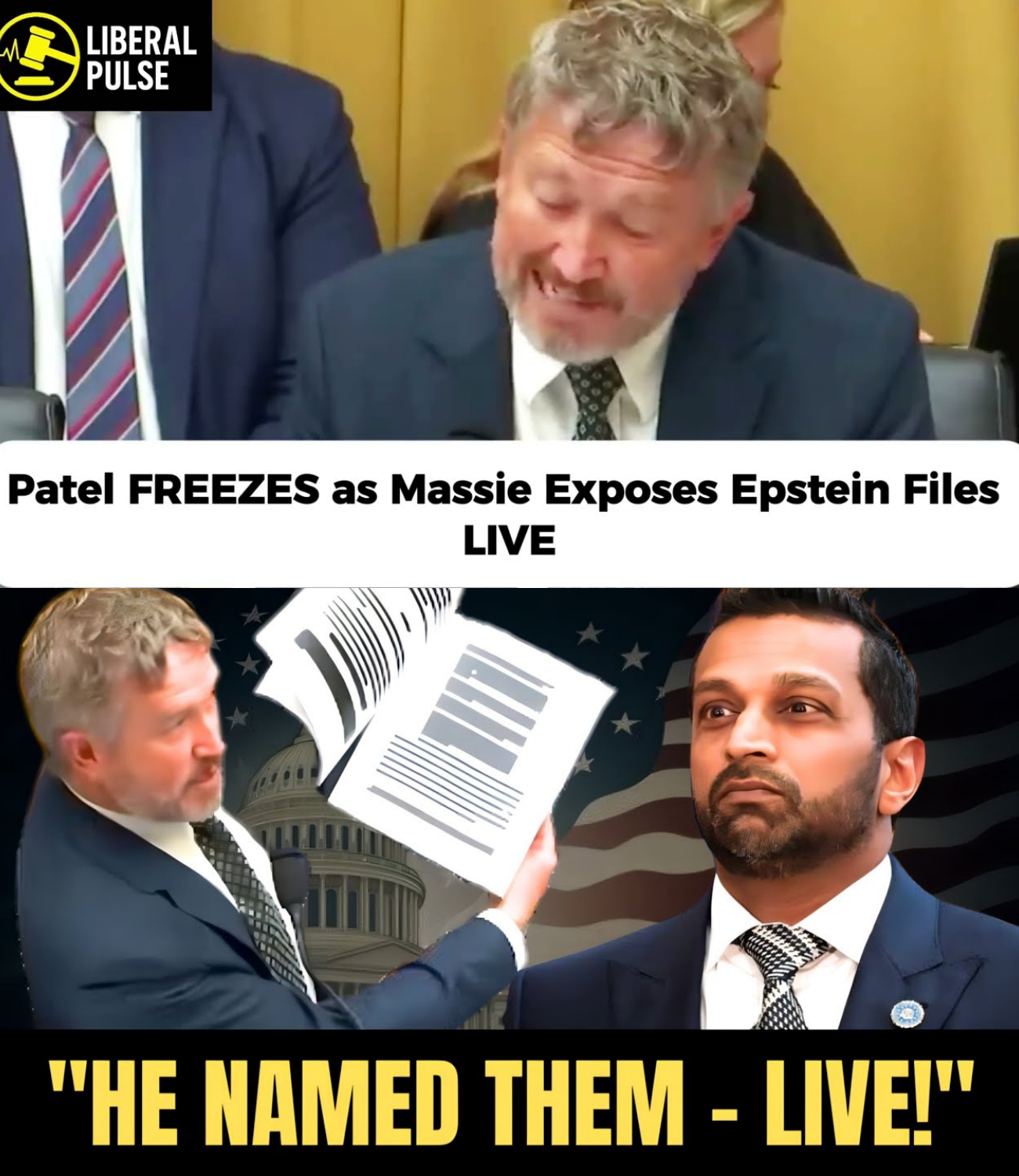
In a rare and riveting moment of accountability, the veneer of federal bureaucracy was stripped away in a congressional hearing that left the public stunned. Representative Thomas Massie, armed with a mountain of documents, court filings, and victim statements, forced a direct confrontation with the FBI. The subject? The long-shrouded and deeply controversial Jeffrey Epstein files. While the mainstream narrative has long suggested that the case was closed and the files contained nothing of substance, Massie’s presentation of evidence suggested an entirely different reality: a massive, coordinated effort to shield some of the world’s most powerful individuals [07:03].
The Documents That Change Everything
Massie did not come to the hearing to speculate. He came prepared with four specific, damning documents that he successfully entered into the official record [00:36]. These included an article quoting former Labor Secretary Alex Acosta, who revealed he was told that Epstein “belonged to intelligence” and should be left alone; an interview with Epstein’s own bodyguard detailing his CIA connections; a report on Epstein’s private calendar showing meetings with former CIA chiefs and Obama administration officials; and a record of 36 meetings between Epstein and former Israeli Prime Minister Ehud Barak [00:44], [09:06], [09:21], [09:30], [09:39].
These records paint a picture that contradicts the “lone wolf” criminal narrative. They suggest that Epstein was a cog in a much larger machine—one that enjoyed protection from intelligence agencies and global political elites [09:47]. When presented with these documents, the FBI’s response was not one of shock, but of carefully rehearsed, bureaucratic evasion [07:27].
The FBI’s “No Credible Information” Defense
The core of the confrontation centered on the FD-302 documents—official FBI interview records produced during the 2019 sex trafficking investigation. According to victims who cooperated with federal authorities, these documents explicitly name at least 20 powerful men, including a top-tier bank CEO, a royal prince, a Hollywood producer, and various high-profile government figures, to whom Epstein allegedly trafficked his victims [02:41], [03:02], [07:50].
When Rep. Massie pressed the FBI Director on whether these files had been investigated, the answer was chillingly dismissive [03:44]. The Director claimed there was “no credible information” to pursue new indictments, hiding behind the fact that multiple U.S. Attorneys across three administrations had reviewed the files and chosen not to move forward [02:12], [04:29], [08:36]. This circular logic—where the same system that is accused of complicity gets to decide what is “credible”—is a hallmark of institutional immunity.
Accountability or Performance?
The tension in the room was palpable as Massie questioned why the FBI would find time to meet with social media influencers to release binders of information, yet consistently avoid direct, personal meetings with the victims themselves [05:24], [11:14]. The Director’s avoidance of a direct promise to meet with these survivors underscored a painful truth: in this system, victims are treated as data points to be managed rather than people to be protected [11:36].
Furthermore, when the conversation shifted to whether the FBI had reviewed the potential CIA file on Epstein, the response was yet another masterful sidestep [06:16], [12:53]. The Director spoke in hypotheticals, questioning the existence of such a file rather than confirming the extent of the FBI’s inter-agency coordination [06:22]. It was a performance of transparency that felt entirely empty to those watching [10:08].
The Legal Black Hole
A crucial detail brought to light during the hearing was a memorandum from July 2025 stating that the DOJ and FBI found no evidence to “predicate an investigation” against uncharged third parties [11:49]. This is the ultimate legal loophole. By ensuring that no charges are ever filed, the identity of these elite figures remains hidden in a “legal black hole” [12:14]. The evidence can exist, the names can be confirmed by victims, but as long as the “uncharged” label remains, accountability is effectively erased [12:22].
The Mirror of Power
The Epstein scandal has long served as a mirror reflecting the nature of modern power. Each redaction, each missing page, and each “no credible information” response serves as a testament to how institutional influence bends the arc of justice [13:37]. The pattern is consistent: high-profile names surface, investigations stall, and the truth is buried under layers of classified files and public fatigue [10:14].
What Massie exposed was not just corruption, but a design. The intelligence ties, the sealed files, and the silence of law enforcement all point to a two-tiered system of justice: one for the average citizen and another for those whose connections are deep enough to make their own crimes disappear [15:54].
A Call for Persistent Inquiry
The most chilling realization from the hearing is how “normal” this level of cover-up has become [14:32]. The calm, detached tone of the FBI Director suggests that this is simply business as usual—a well-practiced script for keeping the untouchable safe [12:45]. However, the resilience of the victims who came forward, and the persistence of lawmakers like Massie, keep the story alive [16:45].
As the hearing concluded and cameras flashed, the silence that followed felt heavy [16:09]. It was not the silence of an empty room, but the silence of protection—the protection of secrets that, if fully revealed, could shake the foundations of our institutions [16:17].
The question for the public is no longer just about what Jeffrey Epstein did. It is about what the system that enabled him continues to hide. Accountability only truly vanishes when the public stops asking questions [16:39]. Every leaked document and every moment of confrontation serves to erode the wall of silence. The Epstein saga is not a closed chapter; it is an ongoing test of whether our democracy can withstand the weight of its own secrets [16:52].
For those who believe that justice should be blind, the pursuit of these files is not just about one man—it is about restoring the integrity of the system itself [17:14]. The silence is beginning to crack, and it is up to the public to ensure that it finally breaks. Keep asking questions, keep demanding transparency, and refuse to let the powerful dictate what is “credible.” The truth is waiting to be found; we just have to be willing to look [17:21].
Full video: