The grand stage of the World Cup is a ruthless theater where reputations are either solidified into immortality or shattered into a million undeniable pieces. For the Portuguese national team, the opening fixture of their 2026 campaign was expected to be a triumphant declaration of intent, a showcase of their dazzling array of attacking superstars. Instead, the world was subjected to a grueling 1-1 draw against the Democratic Republic of Congo—a match that served as a brutal, unvarnished indictment of a deeply flawed footballing system. The final whistle did not bring relief; it brought a heavy, suffocating realization. The numbers behind the performance have been laid bare, and they paint a terrifying picture of a golden generation teetering dangerously on the edge of complete and utter disaster.

When you glance at the team sheet of the Iberian giants, you see a roster that commands fear across Europe. With the likes of Bruno Fernandes pulling the strings, Rafael Leao terrorizing the flanks, Pedro Neto bringing explosive pace, and the legendary Cristiano Ronaldo leading the line, offensive dominance should be a baseline expectation. Yet, the statistics from the agonizing ninety minutes against DR Congo do not just suggest a bad day at the office—they highlight a historic, systemic paralysis. Throughout the entire match, a squad valued in the hundreds of millions managed to muster a pitiful total of just seven shots. To comprehend the magnitude of this offensive drought, one has to traverse all the way back through the history books to the 2002 World Cup, specifically recalling Portugal’s bitter, heart-wrenching 1-0 defeat to South Korea. Not for nearly a quarter of a century has this proud footballing nation looked so completely bereft of ideas, so agonizingly devoid of attacking inspiration on the global stage.
The deeper you dig into the analytics, the more embarrassing the reality becomes for the Portuguese faithful. Out of those seven meager attempts, only one solitary effort managed to find the target—a redeeming header from Joao Neves that ultimately saved his nation from the ultimate indignity of an opening-day defeat. Beyond that single moment of success, the Portuguese attack was an absolute wasteland. To put this into a staggering perspective, at this stage of the tournament, Portugal’s offensive output ranks them just marginally above Algeria, the only team sitting dead last with zero shots on target. Even more damning is the fact that teams constructed with a fraction of Portugal’s resources—nations like Qatar, Curacao, and Haiti—have all demonstrated a more potent, cohesive, and threatening attacking identity. To possess a frontline that routinely dismantles the greatest defenses in the Champions League, yet perform with an offensive efficiency only slightly better than the lowest-ranked teams in the competition, is a catastrophic failure that cannot simply be brushed aside as bad luck.
At the very center of this swirling storm of criticism is the man who has carried the hopes of his nation on his shoulders for over twenty years: Cristiano Ronaldo. The narrative surrounding the five-time Ballon d’Or winner has shifted dramatically from one of inevitable heroics to a profoundly uncomfortable, almost tragic struggle against Father Time and a disjointed tactical setup. Against DR Congo, the legendary forward experienced what is arguably the darkest night of his illustrious international career. Over the course of the full match, Ronaldo registered an astonishingly low twenty-five touches of the football. For a player who was on the pitch for the entirety of the game, this level of involvement is shockingly minimal. More importantly, it is the lowest number of touches he has ever recorded in a full match in his two decades of wearing the famous red and green jersey. He was a man completely marooned on a deserted island, desperately pleading for service that simply never arrived.
This agonizingly quiet performance mathematically extended Ronaldo’s goal drought for the national team to a record ten consecutive matches. It is a staggering statistic that has ignited a fierce, deeply polarizing debate among pundits and fans alike. Is this simply the unavoidable, biological decline of an athlete who has given his body to the sport for so long, or is it the damning result of a tactical framework that has fundamentally failed him? The truth likely exists somewhere in the gray area between both arguments. While it is undeniable that Ronaldo no longer possesses the explosive agility of his youth, the systemic failure occurring right behind him is entirely inexcusable.
The Portuguese midfield, heralded as one of the most creative engines in world football, operated with the speed and imagination of a rusty, broken machine. The passing was overwhelmingly lateral, agonizingly slow, and devoid of the penetrating verticality required to break down a well-organized defensive block. Rather than dynamic movement and sharp, line-breaking passes, the play was characterized by safe, predictable possession that played perfectly into the hands of the opposition. When the creative players did attempt to force the issue, their passes were routinely misplaced, severing any remaining connection to their isolated striker. Ronaldo’s lack of touches was not merely a symptom of his own positioning; it was a blaring alarm bell exposing a midfield completely incapable of transitioning the ball from defense to attack with any sense of urgency or purpose.
Conversely, immense credit must be showered upon the Democratic Republic of Congo. Where Portugal was disjointed and uninspired, the African nation was incredibly resolute, fiercely organized, and remarkably brave. They recognized the lethargy in the Portuguese ranks and capitalized on it brilliantly. DR Congo did not just park the bus in a panic; they executed a meticulously crafted defensive strategy, effectively neutralizing the passing lanes and isolating Portugal’s key threats. More impressively, they were far from passive. When opportunities arose, they surged forward with a directness and confidence that routinely exposed the complacency of the former European champions. For large stretches of the game, it was DR Congo who looked more likely to snatch a victory, turning the heavily favored giants into an anxious, disorganized collective scrambling just to hold on.
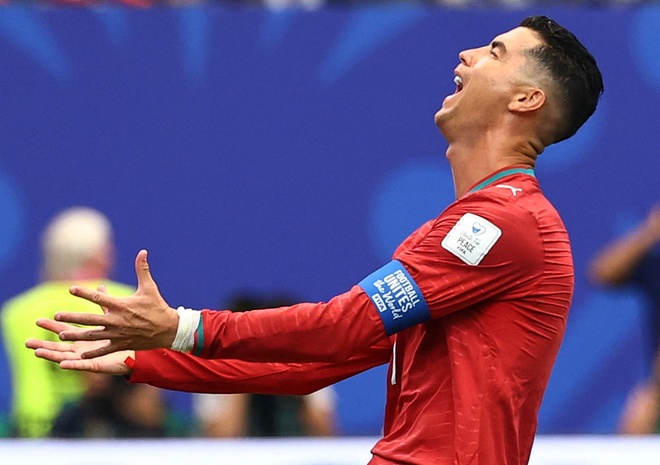
For the Portuguese camp, this 1-1 draw is functionally equivalent to a devastating defeat. The point salvaged does absolutely nothing to mask the glaring deficiencies that have been broadcast to the entire world. The warning signs are flashing a brilliant, unavoidable red. If this lethargic, unimaginative style of play persists, Portugal will find themselves tumbling out of the tournament long before the serious conversations about championship contenders even begin. The coaching staff is now facing the most critical juncture of their tenure. They must orchestrate an immediate, sweeping tactical revolution before their next fixture, or risk overseeing one of the most embarrassing collapses in modern football history.
The time for resting on the laurels of past achievements is officially over. The statistics have spoken, the flaws have been brutally exposed, and the illusion of Portugal’s invincibility has been shattered by a resilient opponent who simply wanted it more. As the dust settles on this shocking result, one agonizing question lingers over the entire tournament: Can this team wake up from their tactical nightmare and salvage the final act of Cristiano Ronaldo’s international legacy, or are we simply watching the tragic, slow-motion collapse of a footballing empire? The world is watching closely, but time is rapidly running out.