
Blanche’s climb through the legal ranks had been a fast, aggressive ascent. He had cut his teeth as a hard-nosed federal prosecutor in the storied Southern District of New York, building a reputation for handling tough, complex cases before migrating to the lucrative waters of private practice. There, he became the ultimate shield for Donald Trump, anchoring the defense through a minefield of high-stakes legal battles—from the Manhattan hush-money trial to the federal wars over classified documents and election interference.
His loyalty was absolute, and the rewards followed. When Trump reclaimed the Oval Office, Blanche was brought in as Deputy Attorney General. By April 2026, when Pam Bondi stepped aside, Blanche ascended to Acting Attorney General. Soon after, the official nomination for the permanent top spot landed on his desk. To his allies, he was a battle-tested fighter ready to dismantle a bloated bureaucracy. To his critics, he was a walking conflict of interest.
But the real firestorm was brewing in that Florida federal court.
It started with a civil lawsuit filed by Trump and his business entities against the Internal Revenue Service, alleging the agency had been weaponized against them for political gain. That suit had culminated in a quiet settlement, one that carried massive, lucrative tax advantages for the Trump side.
The red flag wasn’t just the payout; it was the people at the table. The Department of Justice, now staffed by the very administration Trump led, was technically representing the opposing side—the government. The setup smelled so foul that more than thirty retired federal judges signed their names to a blistering petition, urging District Judge Kathleen Williams to dig into the roots of the deal.
They wanted to know if the entire proceeding amounted to a “fraud upon the court.”
In the lexicon of American law, fraud upon the court is the nuclear option. Whitehouse laid it out for the room with deliberate care. A lawyer can get hit with sanctions or disciplined for bad behavior, or even held in contempt—which is severe enough. But fraud upon the court is a different beast entirely. It means the integrity of the judicial system itself has been corrupted from within.
Whitehouse hammered the point home: this was the first time in the history of the United States that senior officials within the Department of Justice had been accused of committing fraud on a federal court.
When Judge Williams signaled she was reopening the matter to investigate, the responses from the players were telling. The client, the IRS, submitted a detailed defense memo. The gravamen of the accusation was collusion, a game that requires players on both sides of the net. Yet, the Department of Justice stayed completely silent. They refused to answer the court’s invitations to explain whether their actions squared with standard DOJ policy—a policy the department knew inside and out. Only Trump’s personal, private attorneys filed an answer.
To Whitehouse, that silence spoke volumes. He questioned why a department so proud of its heritage wouldn’t stand up to defend its own conduct.
Judge Williams was pushing her investigation forward, and the matter remained completely unresolved as Blanche’s confirmation date loomed closer. Whitehouse drew a straight, dark line back to the Bow precedent. If it was bad to confirm a circuit judge while a contempt inquiry was pending, it was infinitely worse to hand the keys of the entire Department of Justice to a man facing a pending inquiry for fraud upon the court.
The Senate, Whitehouse argued, held the leverage. They had requested documents regarding the previous judicial confirmation fiasco, requests that had been met with a wall of silence from the Justice Department. He made it clear he was done waiting. The Senate needed to hit the brakes. If the department wouldn’t answer a federal judge in Florida, they could damn well answer the committee holding up their nominee’s future. He had run a minute over his time, but the room remained dead quiet. The battle lines were drawn.
Beyond the Florida case, other dark currents were swirling around Blanche’s record. Critics were whispering about his past handling of sensitive files related to the high-profile Jeffrey Epstein case, where a federal judge had noted that Blanche conceded to violations regarding information requests and heavy-handed redactions.
There were also questions about a scrapped financial settlement fund intended for individuals involved in the January 6th Capitol events—a fund critics labeled a political slush fund before the administration backed away under heavy public pressure. Ethics complaints from former judges and a petition signed by over a thousand former DOJ employees were piling up, each alleging that the department was fostering a culture where personal loyalty swallowed institutional independence whole.
Naturally, the counter-offensive from Blanche’s camp was swift. His supporters dismissed the allegations as a coordinated partisan hit job designed to cripple strong, disruptive leadership before it could take root. They pointed aggressively to the scoreboard, highlighting Blanche’s recent victories—including a massive, sweeping 2026 healthcare fraud takedown that resulted in charges against hundreds of individuals involved in multi-billion-dollar schemes. That, they argued, was the work of a man focused on real crime, not political sideshows.
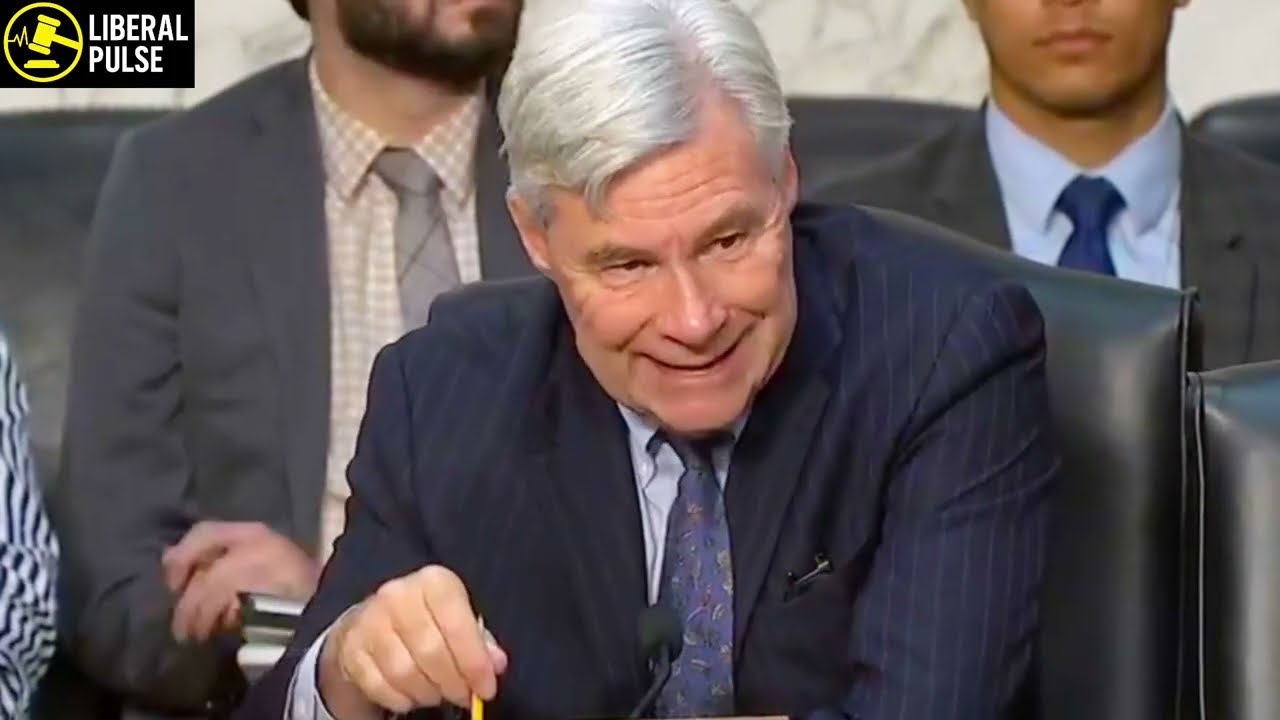
As Whitehouse wrapped up his remarks, the atmosphere in the hearing room felt thick enough to cut with a knife. This fight went deeper than a single nominee; it was a referendum on the public’s remaining trust in the nation’s system of justice.
The reactions across Washington split instantly down predictable party lines. Democrats seized on the Florida case, demanding full transparency and an immediate freeze on the vote. Republicans dug in, pointing to Blanche’s extensive courtroom pedigree and his commitment to law and order.
Online, the legal blogs and cable news panels lit up. Some analysts speculated that Judge Williams’ inquiry in Florida could drag out for months, turning the confirmation schedule into a logistical nightmare. Others wondered if the pressure might eventually force a withdrawal, though the administration’s sheer momentum made that outcome feel distant.
To look closely at Todd Blanche is to see a lawyer who has always gravitated toward the high-voltage center of the courtroom. His defense of Trump proved he had the tactical skill and the stomach to go toe-to-toe with federal prosecutors. That grit made him an easy choice for the administration. But those same attributes fueled the fire of his opponents, who doubted he could ever separate the interests of the President from the interests of the law.
The retired judges who filed the briefs in Florida didn’t do so lightly. They truly believed the majesty of the court had been bypassed in a backroom deal. The Justice Department’s refusal to offer a robust defense only fed the suspicion that those on the inside knew exactly how fragile their position was.
Whitehouse wasn’t a lone voice in the wilderness anymore. Other lawmakers and constitutional scholars were joining the chorus, demanding documents, emails, and direct testimony. In ordinary times, a cloud like this would stall a nomination indefinitely. But these were far from ordinary times, and the friction between political necessity and institutional norms was growing hotter by the hour.
The Department of Justice remains the anchor of the American rule of law. If the public comes to view it as a weapon of favoritism or a shield against accountability, the damage could take a generation to repair.
All eyes now turn back to Florida, where Judge Williams must decide her next move. Will she compel the Justice Department to break its silence? Will her findings land before the Senate takes its final vote?
Meanwhile, Blanche’s team continues to project confidence, keeping the public focus squarely on national crime initiatives and healthcare crackdowns. It’s a stark contrast—aggressive, high-profile prosecutions on one front, while a quiet, dangerous allegation of fraud waits in the shadows.
The confirmation hearings ahead promise plenty of fireworks. Blanche will eventually have to take the hot seat, facing intense questioning from senators determined to peel back the layers of the Florida settlement. How he handles those questions will define his legacy and shape the trajectory of American justice for years to come. For now, the pressure is building, forcing Washington to look into the mirror and answer hard questions about power, loyalty, and the true cost of justice.